How the rules of visibility are shifting from search engines to AI answer engines — and what your brand can do about it.
Picture this: a potential customer opens ChatGPT and types, “What’s the best digital marketing agency for salons?” or “Which skincare brand should I try for sensitive skin?” No scrolling through ten blue links. No comparing star ratings across five tabs. Just one confident, conversational answer — and if your brand isn’t in it, you don’t exist in that moment. This is the new reality of discovery, and it’s happening faster than most marketers realize.
For years, businesses have poured time and budget into ranking on Google. But a growing number of buyers — especially younger, tech-savvy audiences — are skipping search engines altogether and asking AI tools directly. So the question every brand should be asking isn’t just “How do we rank on Google?” anymore. It’s: Can strong SEO actually help your brand get mentioned in ChatGPT? The answer is a resounding yes — but only if you understand how AI models pull, weigh, and trust information. Let’s break it down.
Why ChatGPT Mentions Are the New SEO Frontier
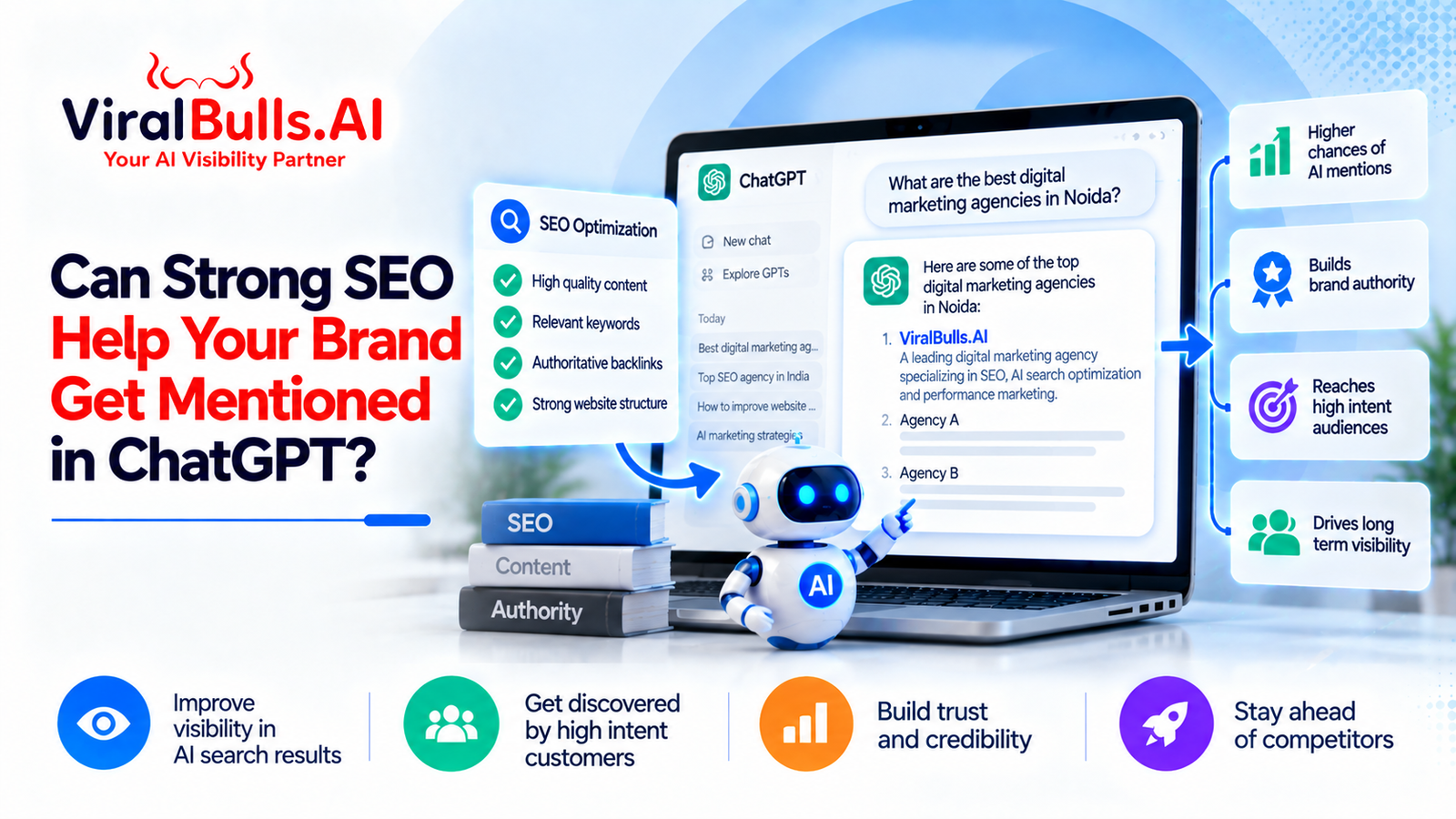
ChatGPT, Google’s AI Overviews, Perplexity, and other generative AI tools don’t invent answers out of thin air. They’re trained on massive datasets and, increasingly, they pull real-time information from the web to answer questions accurately. That means the same fundamentals that helped your website earn trust with Google — quality content, authority, structure, and relevance — are exactly what helps AI models recognize and recommend your brand.
This emerging discipline even has its own name: Generative Engine Optimization (GEO), sometimes called AI SEO or LLM optimization. It’s not a replacement for traditional SEO; it’s an extension of it. If your foundational SEO is weak, your chances of being cited by an AI model are weak too.
How ChatGPT Decides What Brands to Mention
Understanding the mechanics behind AI recommendations helps you reverse-engineer your strategy. Here’s what typically influences whether ChatGPT mentions your brand:
- Content clarity and structure: AI models favor content that’s well-organized with clear headings, direct answers, and scannable formatting — much like how featured snippets work on Google.
- Topical authority: Brands that consistently publish in-depth, expert content around a niche are seen as more credible sources worth referencing.
- Third-party validation: Mentions on reputable websites, review platforms, forums like Reddit and Quora, and industry publications carry significant weight, since AI tools cross-reference multiple sources.
- Structured data and schema markup: Clean technical SEO helps AI crawlers understand exactly what your page is about.
- Freshness and accuracy: Updated, factually consistent content is prioritized over outdated or contradictory information.
In short, ChatGPT is essentially performing its own version of search and synthesis — and strong SEO practices make your content easier to find, understand, and trust.
The Direct Link Between SEO and AI Visibility
Let’s get specific about how traditional SEO efforts translate into AI mentions:
1. High-Quality, Answer-First Content
AI models are trained to extract direct, useful answers. Blog posts and web pages that clearly answer specific questions — using natural language and logical structure — are far more likely to be referenced. This is where content strategy and copywriting best practices intersect with technical SEO.
2. Backlinks and Brand Mentions Across the Web
Just like Google uses backlinks as a trust signal, AI tools evaluate how often and how favorably your brand is mentioned across the internet. A strong digital PR and link-building strategy increases the chances that your brand appears in the data these models learn from.
3. On-Page SEO and Technical Health
Fast-loading pages, clean site architecture, proper heading hierarchy, and structured data aren’t just ranking factors anymore — they’re comprehension factors. AI crawlers need to parse your content efficiently, and technical SEO makes that possible.
4. Local SEO for Local Discovery
For service-based businesses like salons, clinics, or agencies, local SEO signals — Google Business Profile optimization, local citations, and location-specific content — increasingly influence how AI tools answer location-based queries like “best salon near me” or “top-rated digital marketing agency in [city].”
Why This Matters for Your Brand Right Now
The businesses that show up in AI-generated answers today are building a compounding advantage. As more consumers shift from typing keywords to asking questions conversationally, early movers in AI visibility will capture disproportionate attention, trust, and traffic before their competitors catch on.
Think about it from a funnel perspective. At the awareness stage, a ChatGPT mention introduces your brand to someone who wasn’t even searching for you by name. At the consideration stage, being cited alongside credible sources builds instant trust. And by the decision stage, that trust often translates directly into a click, a call, or a booking. This is precisely why forward-thinking marketing teams are treating AI visibility as a core growth channel, not an experimental side project.
How to Start Optimizing for AI Mentions Today
You don’t need to overhaul your entire strategy overnight. Start with these actionable steps:
- Audit your existing content for clarity, structure, and direct answers to common customer questions.
- Strengthen topical authority by publishing consistent, in-depth content around your core services or products.
- Invest in earned mentions through PR, guest posts, and industry roundups where AI models are likely to pull data.
- Clean up technical SEO, including schema markup, site speed, and mobile responsiveness.
- Monitor your brand’s presence by regularly asking AI tools questions related to your industry to see if and how you’re mentioned.
This is also where working with an experienced digital marketing partner makes a measurable difference. At Viralbulls, we combine traditional SEO expertise with emerging GEO strategies to help brands stay visible — whether someone is searching on Google or asking ChatGPT directly.
The Bottom Line
Strong SEO isn’t just about ranking on page one anymore — it’s about becoming the trusted source that AI models reach for when someone asks a question in your industry. The brands investing in quality content, technical excellence, and genuine authority today are the ones that will be recommended by AI tomorrow. The opportunity is wide open, but it won’t stay that way for long. The question isn’t whether AI-driven discovery is coming — it’s whether your brand will be ready when it arrives.
Frequently Asked Questions
Does ChatGPT use Google rankings to decide what to mention?
Not directly. ChatGPT doesn’t pull live Google rankings, but it does draw on training data and, in tools with browsing capability, real-time web content. Since strong SEO improves how easily your content is found, understood, and trusted across the web, it indirectly increases your chances of being referenced.
Is GEO (Generative Engine Optimization) different from traditional SEO?
GEO builds on traditional SEO rather than replacing it. While SEO focuses on ranking in search engine results pages, GEO focuses on being cited, summarized, or recommended within AI-generated answers. The two strategies overlap significantly in fundamentals like content quality and authority.
How long does it take to see AI mentions improve?
Similar to SEO, results aren’t instant. Building topical authority, earning quality mentions, and improving technical SEO typically show measurable impact over a few months of consistent effort, though timelines vary by industry and competition.
Can small or local businesses benefit from AI visibility too?
Absolutely. Local businesses often have an advantage because AI tools rely heavily on specific, well-structured local content and reviews to answer location-based questions, making local SEO a valuable entry point into AI-driven discovery.
What’s the first step my brand should take?
Start by auditing your current content for clarity and answer-first structure, then focus on building genuine authority through consistent publishing and credible third-party mentions. A digital marketing partner experienced in both SEO and GEO can help accelerate this process.