
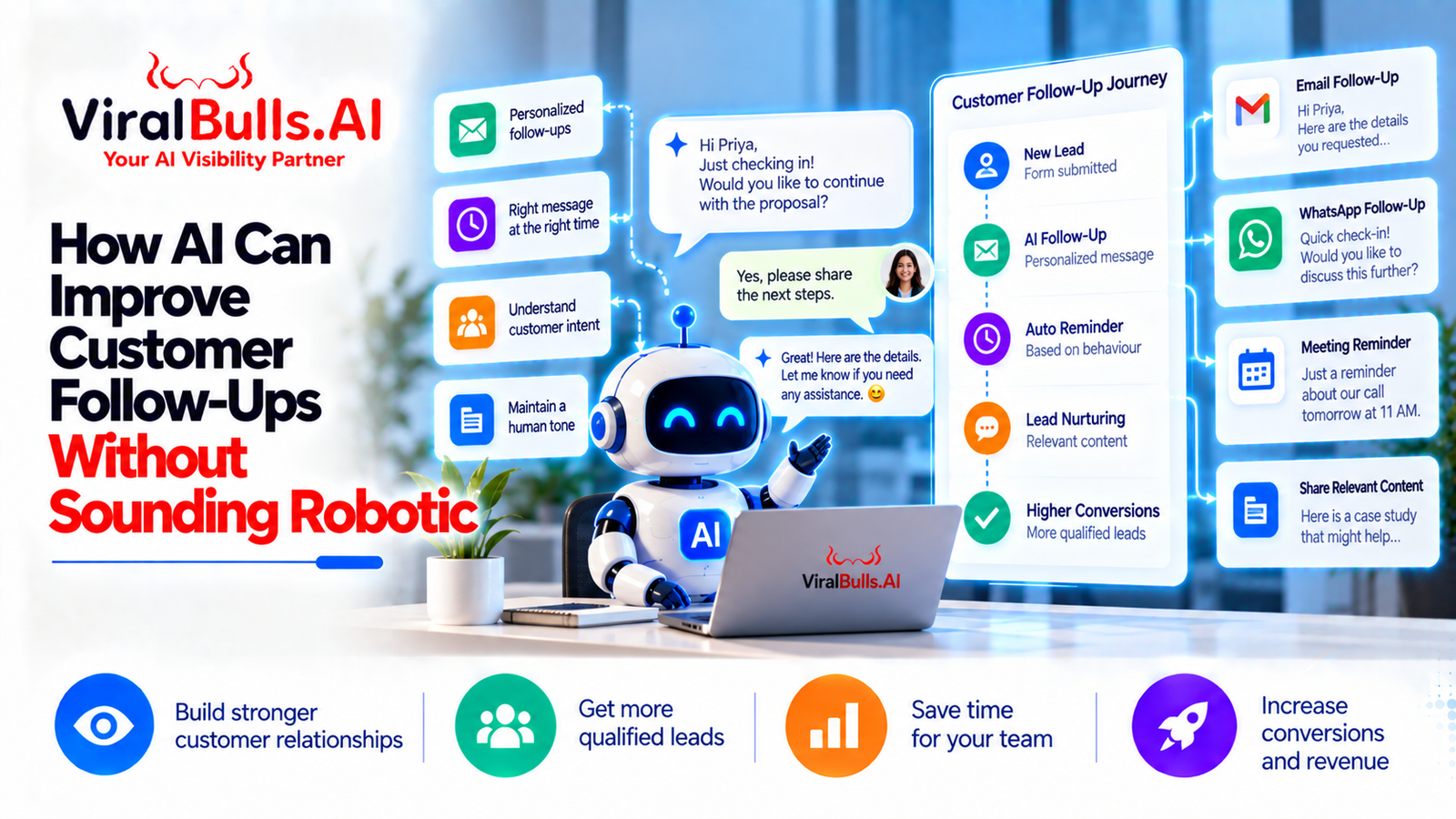
Picture this: a customer asks for a quote on Monday, replies “Looks great, let me think it over,” and then goes quiet. You meant to follow up. Then came three client calls, two deadlines and one very long week. By the time you remember, the lead has gone cold.
Follow-ups are where sales are won and relationships are built, yet they are the first thing to slip when you are busy. AI promises to fix that, but there is a catch every business owner has felt: nobody wants to receive a message that sounds like it came from a vending machine.
The good news is that AI customer follow-ups do not have to sound robotic. Used well, they can feel warmer, more timely and more helpful than the rushed messages we type ourselves. Here is how to get there.
Why Follow-Ups Matter More Than You Think
Most customers do not say no. They simply say nothing. Leads go quiet because life gets busy, not because they lost interest, and a well-timed nudge is often the difference between a closed deal and a forgotten inquiry. The same goes for existing customers: check-ins, feedback requests and renewal reminders drive repeat business and positive reviews.
The real problem is consistency. Manual follow-ups depend on memory, mood and free time. This is where AI for customer follow-ups earns its place. It never forgets, never gets tired, and can reach out at the moment a customer is most likely to respond.
Why Automated Follow-Ups Sound Robotic
Before fixing the problem, it helps to understand its causes. The usual culprits are:
- Generic templates: “Dear Valued Customer” tells people they are one of thousands.
- Bad timing: emails at 3 a.m., or three messages in a single day.
- Missing context: asking a question the customer already answered.
- Stiff language: phrases like “kindly revert” or “per my last email.”
- One-size-fits-all messaging: the same note for a first-time inquiry and a five-year client.
Notice that none of these are really AI problems. They are strategy problems. AI amplifies whatever you feed it, so a lazy template becomes a lazy message at scale.
7 Ways to Make AI Follow-Ups Feel Human
- Personalize beyond the first name. Use purchase history, the service they asked about and the questions they raised. “Hi Priya, you asked about our social media package for your salon, so here is a quick example” beats “Hi Priya, just checking in” every time.
- Teach the AI your brand voice. Share five to ten of your best real messages and describe your tone, such as warm, direct and lightly humorous. List words and phrases you never use. The more specific the instructions, the more natural the output.
- Get the timing right. AI can spot patterns, like when a customer opens emails or revisits your pricing page. Follow up within minutes of a form submission, but give a quote a few days to breathe. Fast is good; pushy is not.
- Add value in every message. “Just checking in” gives the customer nothing. Offer a helpful tip, a short case study, an answer to a likely objection or a useful link. Every follow-up should leave the reader better off.
- Keep it short and conversational. Write the way you talk. Use short sentences, one clear question and one call to action. If a message sounds odd when read aloud, rewrite it.
- Let AI draft and humans finish. The best results come from AI-assisted follow-ups, not AI-only ones. For high-value leads, let the AI produce the first draft and have a team member add one personal line. It takes thirty seconds and changes everything.
- Know when to hand over. Set rules so that frustrated customers, complex questions and sensitive topics go straight to a real person. If you use a chatbot, say so openly. Honesty builds more trust than a clever disguise.
Robotic vs. Human: A Quick Example
Robotic: “Dear Customer, this is a reminder that your inquiry is pending. Please revert at your earliest convenience.”
Human: “Hi Rahul, I wanted to make sure our proposal reached you safely. If any part of the pricing raises questions, I am happy to walk you through it in ten minutes. Would Thursday afternoon work?”
Both could be written by the same AI. The difference is the quality of the instructions, the context and the intent behind them.
Where AI Follow-Ups Work Best
- New lead inquiries and form submissions
- Quotes and proposals awaiting a response
- Abandoned carts and incomplete bookings
- Post-purchase check-ins and review requests
- Appointment reminders and rescheduling
- Re-engaging customers who have been inactive
Mistakes to Avoid
Over-automating. More messages do not mean more sales. Set frequency limits so customers never feel chased.
Fake personalization. Nothing kills trust faster than a wrong name or a broken merge tag. Test before you send.
Skipping the review step. Read a sample of outgoing messages every week and refine your prompts.
Ignoring consent. Respect opt-outs and follow the privacy rules that apply to your customers and your industry.
How to Get Started
You do not need a giant overhaul. Start small:
- Map your follow-up moments. List every point where a customer might need a nudge.
- Write a simple voice guide. Include your tone, sample messages and no-go phrases.
- Test and measure. Pilot one workflow, track reply rates and refine before scaling up.
How to Know It Is Working
Good follow-ups show up in the numbers. Track reply rate, meeting bookings, conversion rate and unsubscribe rate for each workflow. If replies are rising and opt-outs are flat, your tone is landing. If people stop responding after the second message, shorten the sequence or add more value earlier. Also read the replies themselves. Comments like “thanks for remembering” or “this was helpful” are the clearest sign that your AI sounds like a person and not a machine.
Final Thoughts
The goal of AI in customer communication is not to replace the human touch but to protect it. When AI handles the timing, reminders and first drafts, your team gets to spend its energy on real conversations. Get the strategy and voice right, and your customers will simply feel remembered and cared for. That is the kind of follow-up that turns one-time buyers into loyal fans.
Ready to build smarter, more human follow-ups? Explore what Viralbulls AI can do for your business.
Frequently Asked Questions
1. Can customers tell when a follow-up is written by AI?
Only if it feels generic. Messages that are personal, relevant and well-timed read as thoughtful, whoever drafted them.
2. How often should I follow up with a lead?
A common rhythm is one message within 24 hours, another after two to three days and a final one after a week. Adjust based on your sales cycle and how the customer responds.
3. Should I tell customers I am using AI?
Be transparent when customers are talking directly to a chatbot. For AI-assisted drafts reviewed by your team, the message still comes from your business, so accuracy matters most.
4. Will AI follow-ups work for small businesses?
Yes. Small teams benefit the most, since AI covers the repetitive follow-ups that otherwise get missed.
5. What is the biggest mistake to avoid?
Sending messages with no context or value. Always ask what the customer gains from reading your message.